
A Computerised Maintenance Management System (CMMS) is a software solution that helps factories, plants, and facilities manage their maintenance operations more effectively. But what does it actually do, and why are 59% of manufacturers now using one?
In this guide, we’ll explain what a CMMS is, how it works, common use cases, and the real-world business impact it delivers. By the end, you'll see why modern maintenance teams are leaving spreadsheets behind and investing in digital reliability.
A CMMS dashboard that shows boxes of work orders, asset maps, and maintenance KPIs such as downtime, completed tasks, and upcoming inspections
A CMMS dashboard gives real-time visibility for work orders, asset status, and key KPIs such as downtime, completed tasks, and upcoming inspections
What Does CMMS Stand For?
CMMS stands for Computerised Maintenance Management System. It’s a centralised software platform that digitises maintenance workflows, from work orders and inspections to asset history, parts inventory, and compliance tracking.
Think of it as a digital control tower for your maintenance team.
"A CMMS helps maintenance teams do their jobs more effectively and enables managers to make data-driven decisions to manage costs and allocate resources." — Reliable Plant
What is a CMMS (Computerised Maintenance Management System)?
A Computerised Maintenance Management System (CMMS) is software that helps factories and industrial teams track, manage, and optimise maintenance activities — from asset inspections to work order scheduling.
In 2026 CMMS tools will have evolved beyond basic ticketing and spreadsheets. They're now cloud-first, mobile-ready, and packed with AI-driven insights, helping factories reduce downtime, extend asset lifespans, and comply with growing regulatory demands.
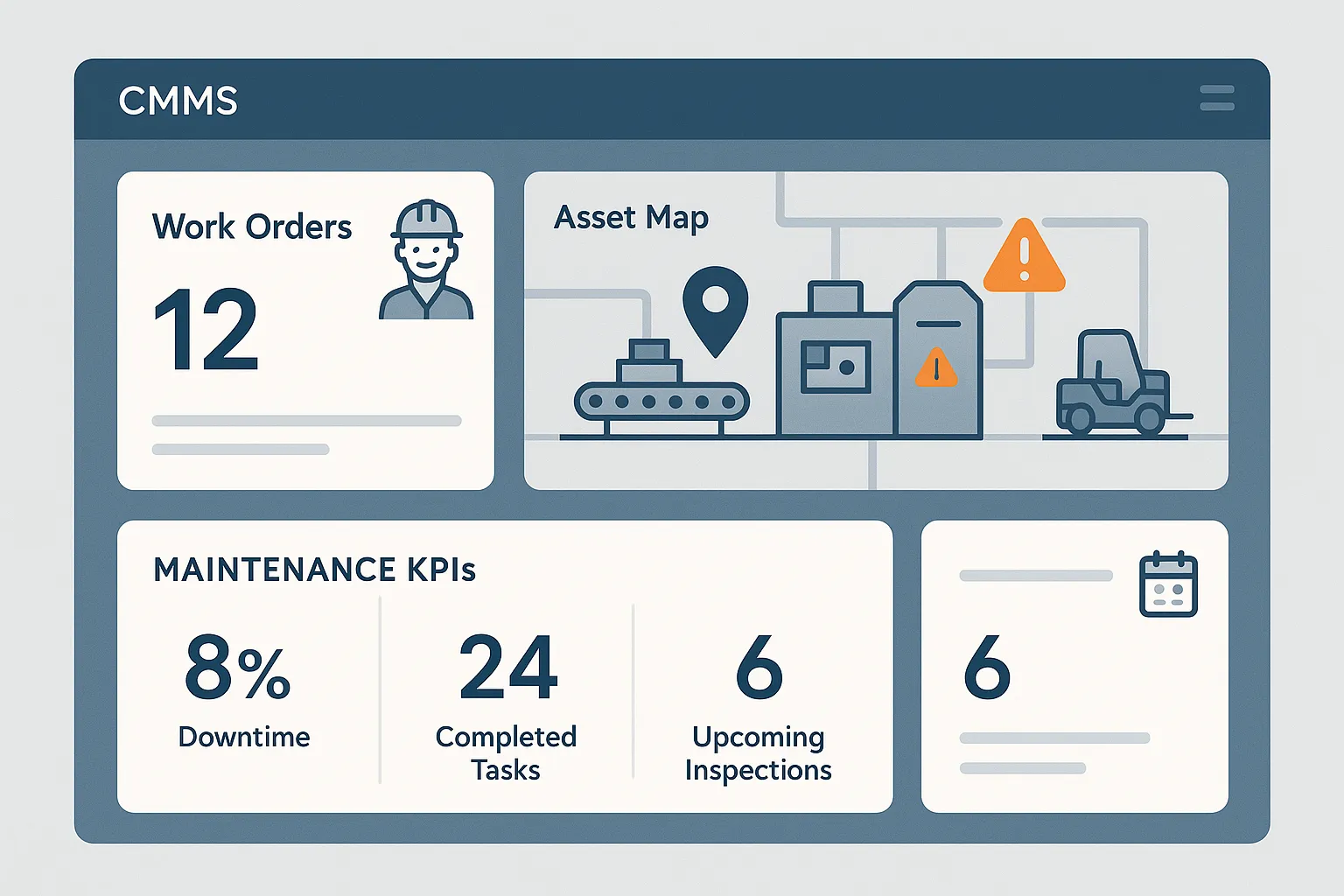
A modern CMMS acts as the nerve centre of your maintenance operations — recording every repair, predicting failures, managing spare parts, and keeping technicians aligned across shifts and sites.
CMMS Defined in Plain English:
A CMMS is essentially your digital maintenance playbook — it keeps track of what needs fixing, when it needs fixing, how it’s been fixed before, and who’s responsible for it. Think of it as the bridge between your machines and your maintenance team.
The basics of CMMS
At its core, a Comprehensive Maintenance Management System is a software solution designed to centralise and simplify the management of maintenance tasks. It serves as a digital hub for tracking, analysing, and optimising all aspects of maintenance operations within an organisation. CMMS is more than just a maintenance tool; it's a strategic asset that enhances operational efficiency, reduces costs, and extends the lifespan of equipment.
The concept of CMMS dates back to the 1960s when early versions of computerised maintenance management systems were primarily used by large enterprises and relied on punch cards and IBM mainframes. Over the years, it has evolved with the advancement of technology. In the 1980s and 1990s, as computers became more affordable and connected, CMMS gained popularity among smaller and mid-sized businesses. Local area networks (LANs) enabled the sharing of maintenance information, and the 2000s witnessed the expansion of CMMS capabilities to mobile devices and field applications through intranets and web-based connectivity. Today, it has entered a new era with the emergence of cloud-based solutions, offering greater functionality, faster implementation, easier maintenance, and enhanced data security.
Why It Matters More Than Ever in 2026
Preventive > Reactive: Modern factories can’t afford unplanned downtime. A CMMS shifts your maintenance from fire-fighting to forecasting.
AI & Automation: Top systems now use AI to analyse logs, auto-generate tasks, and surface root causes.
Mobile & Cloud-Based: CMMS platforms today are accessed on the floor, not just from desktops.
Compliance-Driven: Audits, safety records, and ISO standards are easier to meet when everything’s documented and accessible.
How Does a CMMS Work?
A modern CMMS automates and streamlines five core areas:
Work Order Management: Assign, prioritise, and track tasks in real time
Preventive Maintenance Scheduling: Automate inspections, lubrication, and replacements
Asset History & Documentation: Full traceability across the equipment lifecycle
Parts & Inventory Management: Ensure spares are in stock when needed
Compliance & Audits: Digitally log all safety and quality checks
What is CMMS: Key components and functionalities
A typical CMMS blends various components and functionalities that create a powerful maintenance management tool. Key components include:
Asset registration: The first step involves entering all assets and equipment details into the CMMS. This includes information like make, model, location, and maintenance history.
Preventive maintenance scheduling: It allows for the scheduling of regular preventive maintenance tasks to avoid unexpected equipment failures. These schedules are based on time intervals or usage metrics.
Work Order Management: A work order is created when maintenance is needed. This can be triggered automatically (based on preventive schedules) or manually (in case of a breakdown). Work orders contain details like what needs to be done, the urgency, and the responsible technician.
Inventory Management: The programme tracks the inventory of spare parts and supplies. It can alert when stock is low and needs replenishment, ensuring that necessary features are always available.
Task execution and tracking: Technicians access their work orders through the CMMS, perform the required tasks, and update the system upon completion. They can log details like time spent, parts used, and observations.
Reporting and analytics: The software generates reports and analytics, offering insights into maintenance activities, costs, equipment performance, etc. This aids in decision-making and strategic planning.
User Interface and Experience Aspects
Ease of use: Modern CMMS solutions focus on user-friendly interfaces, making it easy for users to navigate, enter data, and retrieve information.
Customizable Dashboards: Users can often customise dashboards to display the most relevant information at a glance, like pending work orders, inventory levels, and upcoming maintenance schedules.
Training and support: Good CMMS providers offer comprehensive training and support to ensure users can effectively utilise all system features.
Mobile compatibility: Many CMMS tools are designed to be mobile-friendly, allowing users to access the system from smartphones and tablets for increased flexibility.
How a CMMS Works? (2026 breakdown)
- Asset Registry
Every CMMS starts with a centralised asset database — machines, components, tools, and infrastructure. Each asset profile includes:
Technical specifications and manuals
Maintenance history and inspection records
Location and status (online/offline)
Linked spare parts and suppliers
With systems like Makula’s Asset Management Software, this registry becomes the digital twin of your plant.
- Work Order Management
CMMS platforms let you create, assign, and track maintenance tasks:
Reactive requests logged by technicians
Scheduled maintenance triggered by time or usage
Priority rankings and status updates
Mobile access for field teams
Tools like Makula CMMS allow calendar, map, and Kanban views for real-time coordination.
- Preventive Maintenance
Preventive maintenance (PM) is now the default, not the upgrade:
Automatically triggers tasks based on operating hours, sensor thresholds, or inspection checklists
Helps reduce unexpected failures and maintenance costs
CMMS tracks performance over time, so you can refine your PM strategy
- Inventory & Spare Parts
A good CMMS doesn’t just track assets — it ensures the right parts are available when needed. You can:
Monitor part usage
Receive low-stock alerts
Track supplier performance
Forecast reorder needs
- Reporting & Analytics
Today’s CMMS platforms provide dashboards and custom reports for:
Downtime trends
Mean Time to Repair (MTTR)
Maintenance costs
Technician productivity
CMMS tools like Makula Industrial AI even predict failures before they happen.
CMMS Examples (Real-World Use Cases)
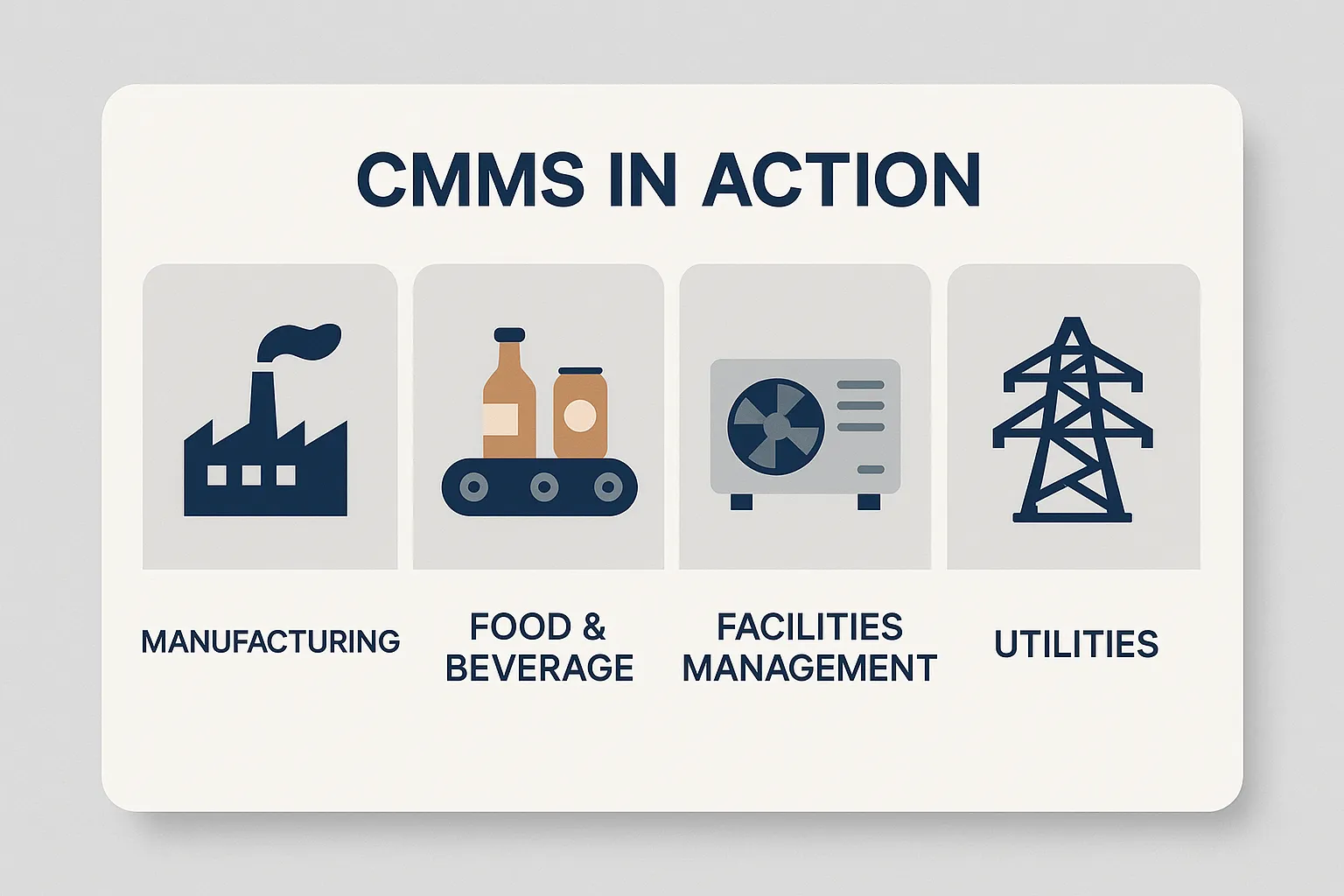
- Manufacturing:
Schedule preventive tasks for production lines
Monitor asset performance and reduce downtime
Used by teams in Makula’s Manufacturing and Food & Beverage sectors - Facilities Management:
Manage HVAC, lighting, fire safety checks
Log technician inspections with time-stamped records
Useful for Facilities Management - Energy & Utilities:
Run condition-based maintenance using IoT sensors
Cut unplanned outages across the distributed infrastructure
CMMS vs EAM: What’s the Difference?
While both are used in asset management, CMMS is focused on maintenance, whereas Enterprise Asset Management (EAM) covers the full asset lifecycle, including procurement, depreciation, and capital planning.
If you're running a mid-sized plant or facility, a CMMS is likely all you need.
Here’s a straightforward breakdown:
In Plain Terms:
If you're trying to reduce downtime, manage parts, and stay on top of inspections, a CMMS is the right fit. If you need to track asset value, plan budgets, or oversee a huge asset portfolio, then EAM makes more sense — but comes with more complexity.
Want the best of both? Platforms like Makula give you CMMS power with EAM extensibility — without the bloat.
Benefits of Using CMMS
⏱️ Downtime Reduction
According to Plant Engineering, each unplanned downtime incident costs ~$108,000 on average. A CMMS reduces this by enabling preventive maintenance and faster response times.
Predictive maintenance cuts machine downtime by 30–50% (McKinsey)
Plants using CMMS report 28% higher uptime (Aberdeen Group)
ROI & Efficiency
CMMS platforms often pay for themselves within two years: 300–500% ROI in efficiency and cost savings
Predictive strategies lower maintenance costs by 25% (Deloitte)
Compliance & Safety
CMMS helps pass audits and avoid regulatory fines by documenting every inspection, repair, and calibration.
Companies with preventive maintenance programs see 50% fewer safety incidents (FaultFixers)
“CMMS adoption is now a strategic priority” — Plant Engineering
Workflow visibility and Work Order Management:
CMMS provides visibility into work orders, allowing maintenance teams to track the status of tasks and ensure timely completion. It streamlines the work order management process, reducing downtime and improving productivity.
Mobile workforce:
With the advancement of technology, CMMS software now offers mobile capabilities, allowing maintenance technicians to access work orders and asset information on the go. This enhances communication and collaboration between team members, leading to improved efficiency.
Automation and processes:
CMMS software automates various maintenance processes, such as generating work orders, scheduling preventive maintenance tasks, and managing parts inventory. This saves time, minimises errors, and ensures consistency in maintenance practices.
Asset Lifecycle visibility:
Organisations can effectively maintain and manage their assets and extend their lifespan. CMMS software allows users to track asset performance, schedule preventive maintenance, and quickly address any issues or repairs. This proactive approach to asset management helps in strategic planning and budgeting, prevents major breakdowns, and extends the lifespan of equipment and machinery.
Increased Employee Productivity
By automating and streamlining maintenance processes, CMMS software frees up maintenance staff's time, allowing them to focus on more critical tasks. This improves overall productivity and boosts employee morale and job satisfaction. It also provides a centralised platform for communication and collaboration, allowing teams to work together more efficiently.
⚙️ 28% Cost Reduction
“Companies using CMMS reported a 28% drop in maintenance costs and 20% less downtime.” — ClickMaint / Aberdeen
🔁 78% Extend Equipment Life
“78% of businesses saw longer asset lifespans after implementing CMMS systems.” — LLCBuddy 2025 Stats
🔧 53% Boost in Lifespan
“CMMS adoption can extend equipment life by up to 53%, especially in industrial settings.” — UpKeep Research
Applications of CMMS across industries
- Manufacturing industry:
CMMS (Computerised Maintenance Management System) is widely used in manufacturing to streamline and automate maintenance processes. It allows machine manufacturers to schedule maintenance tasks, track equipment performance, and manage work orders efficiently. By utilising it, manufacturers can reduce downtime, optimise asset performance, and improve overall productivity. - Healthcare industry:
CMMS is also valuable in the healthcare industry, where the maintenance of medical equipment is critical. It helps healthcare facilities track and manage equipment maintenance, ensuring that all medical devices are properly maintained and ready for use. This reduces the risk of equipment failure, enhances patient safety, and improves the overall quality of care. - Transportation industry:
The transportation industry, including airlines, railways, and shipping companies, relies on CMMS to manage and maintain its fleet of vehicles and equipment. With this software, transportation companies can monitor maintenance schedules, track repairs, and optimise maintenance costs. This helps prevent costly breakdowns, improves vehicle reliability, and ensures compliance with safety regulations. - Hospitality industry:
Hotels, resorts, and other hospitality establishments can benefit from CMMS to manage maintenance tasks related to their buildings, facilities, and equipment. It allows for proactive maintenance planning, ensuring that guest rooms, common areas, and other facilities are well-maintained. This helps enhance customer satisfaction, reduce operational costs, and prolong the lifespan of assets. - Energy industry:
CMMS is widely used in the energy and utilities sector, including power plants, oil refineries, and renewable energy installations. Using CMMS, energy companies can schedule and manage maintenance activities for critical equipment such as turbines, generators, and pipelines. This helps minimise downtime, optimise energy production, and ensure compliance with safety and environmental regulations. - Education sector:
Schools and Higher Education Institutes can effectively utilise CMMS to manage maintenance tasks for their buildings, classrooms, and facilities. It enables educational institutions to track work orders, schedule maintenance activities, and monitor equipment performance. This helps create a safe and conducive learning environment for students while minimising operational costs.
Government and municipalities: CMMS is valuable for government agencies and municipalities in managing maintenance tasks for public infrastructure such as roads, bridges, parks, and utilities. By implementing CMMS, government organisations can improve maintenance planning, track costs, and ensure timely repairs and upkeep of public assets. This leads to improved public safety, enhanced citizen satisfaction, and efficient use of taxpayer funds.
The Future of CMMS
Several emerging trends and technological advancements will significantly influence the future of Computerised Maintenance Management Systems. Here's an overview:
Emerging trends in CMMS technology:
AI and IoT Integration: Artificial Intelligence (AI) and the Internet of Things (IoT) are becoming increasingly integrated into CMMS solutions. AI can be used for predictive maintenance, using data analytics to forecast when equipment might fail. IoT devices, like sensors on machinery, can feed real-time data into the CMMS, allowing for more immediate and accurate monitoring and decision-making.
Cloud-Based solutions: The shift towards cloud-based CMMS will continue, offering better scalability, remote access, and reduced need for on-site IT infrastructure.
Mobile accessibility: Mobile devices in CMMS are growing, enabling technicians to access and input data on the go, increasing efficiency and real-time updating of information.
Advanced Analytics and Big Data: As CMMS collects vast amounts of data, using advanced analytics tools will become more prevalent, enabling deeper insights into maintenance operations and equipment performance.
Predictions for future development:
Integration with Other Systems: Future CMMS may integrate more seamlessly with other business systems, such as ERP (Enterprise Resource Planning) and EAM (Enterprise Asset Management), for a more holistic view of organisational operations.
Customisation and Flexibility: As businesses have varying needs, future CMMS solutions will likely offer greater customisation and flexibility to cater to specific industry requirements.
Enhanced User Experience: User interfaces are expected to become more intuitive, making it easier for all personnel to interact with the system.
Focus on Cybersecurity: With the increasing reliance on digital solutions, there will be a heightened focus on cybersecurity within CMMS platforms to protect sensitive data.
These trends and developments suggest that CMMS's future is about maintaining and managing assets efficiently, driving sustainability, and integrating with broader business systems and technologies for comprehensive operational improvement.
Why Makula CMMS?
If you're ready to move from firefighting to foresight, Makula’s CMMS Platform is designed specifically for factories, plants, and maintenance-intensive teams.
If you’re looking for a CMMS that actually speaks factory, not facility, then Makula is worth your shortlist.
Unlike generalist platforms, Makula is purpose-built for industrial maintenance teams. Its architecture is modular, but everything begins with a strong foundation: your assets.
Asset-Centric by Design
Every action in Makula starts with the Asset Management Software — a digital twin of your entire factory:
• Each machine, part, and system is traceable
• Inspection logs, warranty info, and schematics are linked
• QR codes connect physical assets with digital records
The Makula CMMS works on top of this, giving you unparalleled context for every work order.
CMMS That Works the Way You Do
With Makula CMMS, teams can:
• Create and assign tasks in seconds
• Automate preventive maintenance by calendar or meter thresholds
• Track work in real time using maps, Kanban, and mobile views
• Scan assets on-site and generate reports instantly
Add-on Intelligence — When You're Ready
Need more than scheduling and spreadsheets? Makula also offers:
• Industrial AI — answers from your manuals, AI-powered root cause detection, and meeting transcription
Why It Works
Makula wins where legacy CMMS fails:
• Built for manufacturing, not borrowed from building maintenance
• Modular pricing (no bundles)
• Scales from single-site ops to multinational plants
• Cloud-native, mobile-friendly, ready for action
Makula Pricing (2026)
Makula’s model is refreshingly transparent:
• CMMS – €55/user/month
• Industrial AI – €39/user/month
Why Makula CMMS?
If you're ready to move from firefighting to foresight, Makula’s CMMS Platform is designed specifically for factories, plants, and maintenance-intensive teams.
✅ Explore CMMS Features
✅ Reduce Downtime
Conclusion
As more and more maintenance teams recognise the importance of asset management, Computerised Maintenance Management Systems have become a major driver of business success. By providing an effective way for organisations to track and store all their assets and streamline workflow processes, it's easy to see why understanding the value of maintaining a centralised repository is one of the most important steps in today's maintenance management practices. Not only is it fundamental for cost savings, but it also helps maximise operational efficiency while meeting industry standards. Don't wait too long; start recognising the power of Computerised Maintenance Management Systems today to remain competitive and benefit from its advantages in your business operations!
Sources:
- Plant Engineering (2023) – https://www.plantengineering.com/maintenance-survey-indicates-shift-to-cloud/
- McKinsey & Co. – https://www.mckinsey.com/capabilities/operations/our-insights/manufacturing-analytics-unleashes-productivity-and-profitability
- Deloitte Analytics – https://datacentremagazine.com/articles/predictive-maintenance-in-the-data-centre-the-power-of-ai
- Aberdeen Group – https://www.faultfixers.com/blog/preventive-maintenance-roi
- FaultFixers (2025) – https://www.faultfixers.com/blog/preventive-maintenance-roi
- Reliable Plant – https://www.reliableplant.com/maintenance-management-31856

.webp)