Are you simply ticking boxes, or are you actually preventing breakdowns?
Many maintenance teams face a frustrating reality: "We don't know if our PM schedule reduces failures." It’s an all-too-common situation, found everywhere from large industrial sites to smaller facilities with modest assets. You spend countless hours greasing bearings, changing filters, and inspecting belts, yet unexpected downtime still wreaks havoc on your production line. If your team is diligently doing the work but constantly fighting reactive fires, your PM schedule efficiency is fundamentally broken.
Relying on preventative maintenance (PM) routines just because a manual suggests it without measuring their actual impact on equipment reliability is a massive drain on your budget and labour. Often, maintenance departments struggle to defend their spending to finance teams or upper management, especially when the link between their efforts and reduced breakdowns is unclear. It’s time to move away from assumptions and instead start using data that tells you exactly what’s working and what isn’t.
The Trap of Blind Preventive Maintenance
A robust maintenance programme should give you peace of mind. However, when you lack visibility into whether your scheduled tasks actually stop machines from breaking down, any reassurance is an illusion. The truth is, not every PM task is as valuable or necessary as you believe. Some may even be redundant, or worse, masking hidden issues.
When you have low PM schedule efficiency, you often experience:
- Over-maintenance: Replacing parts that still have months of useful life left, simply because a calendar dictated it. This costs not only for unnecessary parts but also increases the likelihood of early-life failures due to human error.
- Wasted labour: Technicians spending hours on low-value inspections or tasks instead of focusing on root-cause analysis or critical emergency repairs. Labour is one of your highest operational costs, and misallocating it hurts your budget.
- Persistent failures: The worst-case scenario is performing all the recommended PMs, yet assets still fail catastrophically. If you've ever faced an unplanned shutdown just days after a scheduled PM, you have felt this pain.
If your planned maintenance does not directly correlate with a reduction in emergency work orders, you are wasting time and valuable resources. You need a fast, clear way to audit your current strategy and start seeing measurable results.
Why Most Teams Lose Sight of PM Schedule Efficiency
The primary reason maintenance teams lose sight of PM schedule efficiency is the focus on activity rather than outcome. In many environments, compliance is measured by whether the job was ticked off, not whether it delivered any real benefit. When productivity is measured this way, team energy is wasted on “busyness” instead of effectiveness.
Many teams continue to follow inherited PM routines, simply because “that’s how we’ve always done it.” Old procedures rarely get questioned or reviewed, even when the production environment or asset base has changed dramatically. Worse still, few organisations pause to evaluate whether emergency breakdowns have reduced after years of scheduled PMs.
Modern maintenance requires a more strategic approach. You need to challenge each PM, asking: Does this actually make the asset more reliable? It’s here that a PM schedule efficiency assessment changes everything.
What is a PM Efficiency Snapshot?
You do not need a year-long consultancy project to figure out if your maintenance strategy is working. A PM Efficiency Snapshot is a rapid, data-driven assessment designed to evaluate your PM schedule efficiency in just 48 hours.
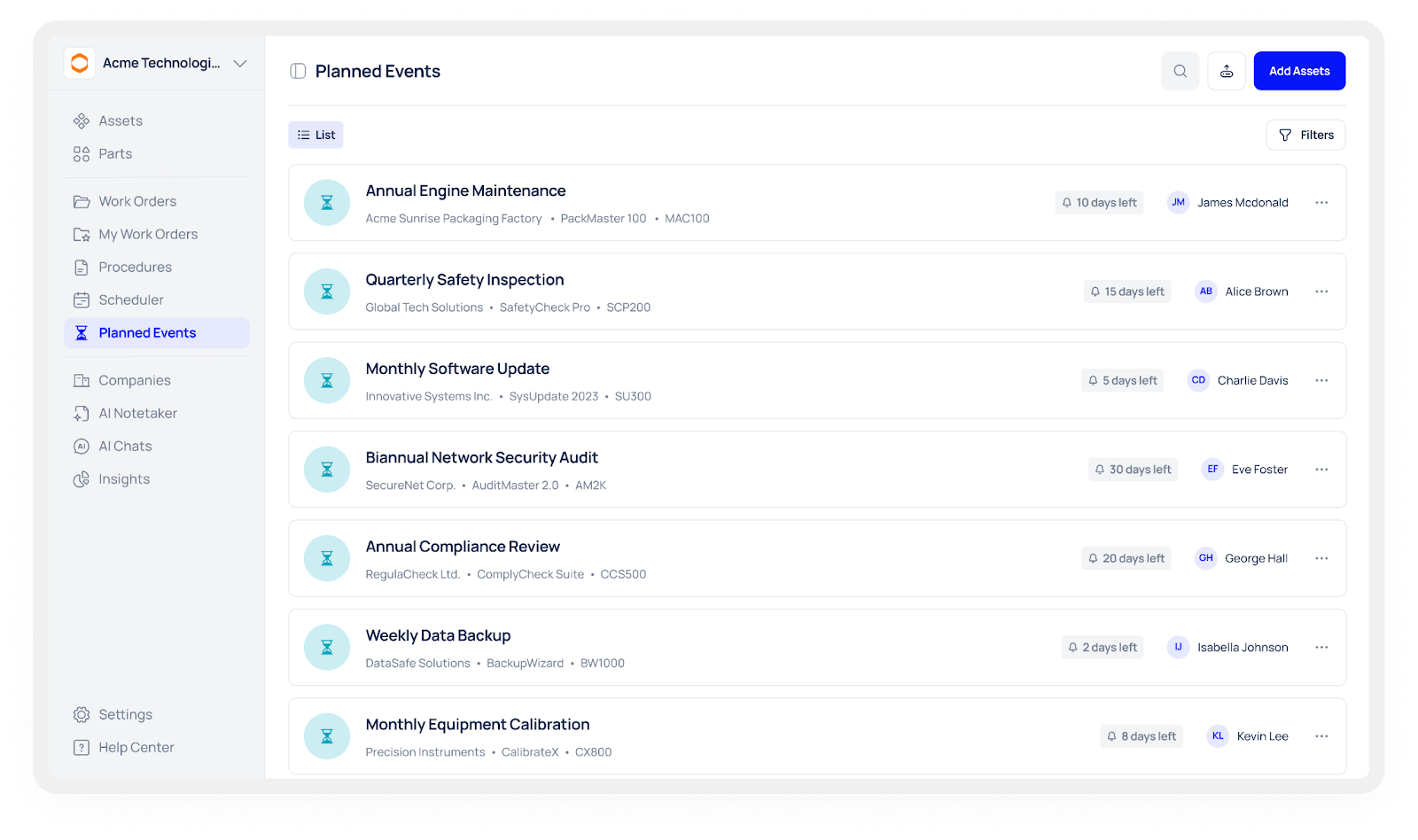
Here’s how it works: by comparing your preventative maintenance logs against your reactive fault tickets and asset histories, you can instantly identify which tasks are adding value and which are merely creating busywork. This targeted approach allows you to pinpoint the exact assets or PM routines where your scheduled work is failing to prevent breakdowns.
Conducted over two business days, the PM Efficiency Snapshot uses exportable reports from your maintenance system (or even basic spreadsheets) to build a clear picture. The process asks:
- Which assets have had breakdowns despite being up to date on PM?
- Are there PM routines that haven’t prevented failures?
- Which scheduled PMs have correlated with improved uptime or reduced emergency work?
If you use a platform like Makula CMMS, collecting this data and visualising the results is done within a few clicks, taking the guesswork and manual effort out of the process.
Key Insights: Good vs Poor PM Execution
Understanding where you stand requires looking at the right metrics. Here is a breakdown of what different levels of efficiency look like on the shop floor:
If your asset or maintenance data looks more like the left column, you are overdue for an optimisation. But change does not have to be daunting.
Data-Driven Maintenance with Makula
Transitioning from a blind schedule to a highly effective maintenance strategy requires accurate data. Using a modern maintenance platform like Makula allows you to track the direct relationship between your preventative tasks and your equipment uptime. When you can easily overlay your PM completion history with your breakdown reports, the path to optimisation becomes entirely clear.
Benefits include:
- Immediate access to key KPIs (e.g., MTBF, MTTR) alongside your PM completion rate
- The ability to segment by asset and identify where PM is (and isn’t) making a difference
- Custom dashboards that highlight cost savings and labour allocation improvements over time
Armed with factual insights, you can confidently delete useless tasks, adjust frequencies based on actual wear and tear, and ensure every hour your technicians spend wrenching actually protects your bottom line.
How a PM Efficiency Snapshot Drives Change
Once you know which tasks truly prevent equipment failure, your maintenance regime can shift from reactive firefighting to smart, proactive asset care. Improvements you can expect when you act on your PM schedule efficiency snapshot:
- Reduced Downtime: When PMs are targeted and effective, assets fail less often, and emergency interventions drop.
- Cost Savings: Fewer unnecessary part replacements and optimised labour allocation equal direct savings.
- Happier Teams: Technicians are empowered and less frustrated when PM routines make a real difference to the plant.
- A Stronger Business Case: Maintenance teams can clearly show finance or leadership teams the impact of smart PM scheduling with numbers, not just anecdotes.
By applying the results from your efficiency snapshot, your next annual maintenance review will be evidence-based, setting your operation apart.
Ready to See What Works?
Stop pouring resources into a maintenance schedule that does not deliver results. It is time to find out exactly what’s working and what is wasting your time and your budget. In just 48 hours, you can go from feeling uncertain to having complete clarity.
Request a PM Efficiency Snapshot today and join the growing community of maintenance managers who make every hour and every pound count.

.webp)